The mechanical infrastructure responsible for managing the thermal dynamics of a residential property represents both the primary vehicle for ensuring domestic comfort and the single largest consumer of electrical energy within the household asset. For many property owners, monthly utility statements are viewed as an arbitrary, uncontrollable overhead expense rather than a direct reflection of mechanical system health.
In reality, contemporary building science data and engineering audits consistently demonstrate that the operational efficiency of an engine or compressor is a fluid, evolving metric that degrades progressively when subjected to unmitigated friction, thermal duress, and environmental contamination. Allowing a home climate system to drift into a state of deferred maintenance forces core internal components to consume excessive amounts of energy simply to satisfy baseline thermostat settings.
Transitioning from a reactive, crisis-focused management style to a proactive program of targeted mechanical improvements transforms home energy conservation from an abstract environmental theory into an active, high-yield wealth preservation strategy. By analyzing your climate control matrix as an interconnected network of physical, mechanical, and electrical systems, you can strategically deploy optimization protocols that isolate inefficiencies, eliminate phantom energy waste, and permanently lower your property’s daily operational overhead.
Improving System Efficiency Through Routine Maintenance
The invisible circulation of conditioned air through a home’s mechanical duct network acts as the primary lifeblood of residential comfort, yet this continuous movement introduces a constant stream of environmental debris into internal machine cavities. Over multiple seasons of uninterrupted operation, fine dust layers, pet dander, lint, and microscopic organic particulates accumulate across blower wheel fins, air filtration barriers, and delicate heat-exchange matrices. This accumulation acts as an insulating blanket that restricts essential airflow and decreases thermal transfer capabilities across the system.
When internal components are restricted by debris, static pressure within the ductwork scales aggressively upward, forcing the primary blower motor to draw increased electrical amperage to move air through the house. To halt this silent drain on your financial resources, smart property owners partner with highly qualified, licensed HVAC companies to execute comprehensive routine system cleanings and chemical flushes.
Expert field technicians utilize specialized air-whips, high-vacuum extraction arrays, and coil-cleansing agents to strip away years of environmental contamination down to the bare metal substrates. Restoring original surface clarity maximizes heat-exchange rates, reduces internal mechanical resistance, and slashes monthly electricity usage footprints, allowing your system to deliver peak thermal output with minimum energy consumption.
Upgrading Equipment to Reduce Monthly Energy Costs
Every mechanical appliance operating within a home has a definitive, chronological threshold where ongoing repair attempts become financially self-defeating due to rapid advancements in material science and engineering efficiency. Legacy climate control units manufactured decades ago operate on obsolete compression frameworks that consume up to fifty percent more electrical power than modern, high-performance systems. Continuing to patch up a failing, single-stage compressor that has suffered advanced internal valve wear quietly inflates your baseline utility expenditures with every single hour of operation.
When a climate system reaches the end of its functional lifecycle, consulting with a certified HVAC contractor to execute an equipment upgrade represents the ultimate strategy for securing long-term operational savings. Modern replacement units utilize high-efficiency scroll compressors, advanced electronic expansion valves, and environmentally safe refrigerants that optimize thermodynamic transformations under extreme duress.
Your installation technician performs a meticulous whole-house heat load calculation to ensure the new equipment is sized precisely to match the thermal boundary of your home, eliminating the energy-guzzling performance penalties associated with oversized machinery. Investing in a modern, properly calibrated equipment swap slashes your seasonal energy footprint and completely seals your home envelope against runaway operational costs.
Keeping Heating and Cooling Systems Running at Peak Performance
Sustaining an immaculate, energy-efficient indoor living profile requires an unyielding investment in advanced diagnostic profiling and precision internal adjustments that eliminate hidden mechanical friction. A central climate control system is a complex, hyper-sensitive loop where a minor electrical anomaly or an uncalibrated sensory component can trigger widespread operational efficiency drops across the entire network. For instance, slightly corroded electrical contacts or aging capacitors can cause voltage drops that force internal fan motors to run hot and slow, wasting energy through ambient heat loss rather than mechanical rotation.
Securing the specialized talents of a comprehensive HVAC Service team allows property owners to stay ahead of these hidden thermodynamic friction points. Professional diagnostics include checking electrical terminal torques, verifying motor insulation resistance metrics, testing fan blade balancing, and auditing the precise calibration of digital thermostats.
Eliminating these minor sub-surface liabilities prevents the short-cycling sequences that place immense strain on your compressor’s starting wind, keeping your primary mechanical grids running with silent, cost-effective precision.
Choosing Reliable Solutions for Year-Round Comfort
The physical capacity of a residential building to easily navigate the volatile transitions between freezing winter sub-zero levels and blistering summer heat peaks depends heavily on the long-term reliability of its primary thermal plants. Relying on inconsistent, generic window units or uncalibrated standalone space heaters to manage localized temperature imbalances is an incredibly inefficient approach that creates massive localized energy spikes throughout the home.
True thermal equilibrium and sustainable resource conservation are achieved by integrating your entire property under a unified, professionally engineered climate grid. Working alongside a premier, full-service heating and cooling company allows property owners to select and install balanced, multi-zone ductless mini-split arrays or highly advanced heat pump systems that adapt fluidly to shifting regional weather trends.
These comprehensive climate solutions utilize intelligent zoning dampers and localized sensors to deliver targeted thermal conditioning exclusively to active rooms, completely eliminating the wasteful expense of cooling or heating unoccupied square footage. Partnering with proven regional masters guarantees that your home’s central environment is backed by an ironclad foundation of engineering excellence, securing absolute year-round comfort with minimum resource expenditure.
Extending Equipment Lifespan With Preventive Care

The long-term capital efficiency and structural durability of a home heating plant are directly anchored to how consistently the system’s combustion chambers and heat exchangers are cleaned and balanced throughout their operational lifecycles. When a central gas furnace or heat pump is forced to operate through intense winter cycles with clogged filters, misaligned burners, or calcified safety limit sensors, internal temperatures within the heat exchanger shell spike dangerously high. This continuous thermal overstress causes the underlying metal alloys to fatigue, warp, and develop structural micro-fissures that can leak dangerous combustion gasses into your indoor air stream while destroying the unit’s efficiency.
Implementing a highly disciplined regimen of preventive furnace maintenance represents an essential household hack for avoiding premature system condemnation. Certified technicians dismantle burner assemblies to scrub away restrictive carbon soot, check gas manifold pressure settings against factory parameters, and test the structural sealing of the exhaust venting flues.
This meticulous preventative care protocol maximizes baseline fuel combustion efficiency, slashes your monthly heating bills, and extends the functional operational lifecycle of your primary heating asset by several decades, protecting your family and your capital investment from sudden destruction.
Investing in Smart Improvements That Lower Energy Use
The modern smart home relies on digital automation and real-time data tracking to maximize resource allocation efficiency, transforming home climate control from a manual guessing game into an exact science. Traditional programmable thermostats rely on static time inputs that fail to adjust for unexpected lifestyle shifts, weather anomalies, or shifting electrical utility rate structures throughout the day.
To achieve a true leap forward in automated energy conservation, property owners must commit to integrating advanced, high-performance energy efficient upgrades across their primary climate networks. Modern smart thermostats utilize intelligent occupancy sensors, geofencing technology, and machine-learning algorithms to map out your household’s daily traffic patterns, automatically scaling back climate conditioning the exact moment the home is empty.
Furthermore, these digital control platforms communicate directly with variable-speed compressor systems to adjust cooling and heating outputs in microscopic increments based on real-time outdoor humidity and solar heat-gain metrics. Investing in these sophisticated smart controls removes human error from hardscape management, providing an incredibly streamlined, low-consumption residential infrastructure that slashes phantom energy waste.
Addressing Cooling Issues Before Efficiency Declines
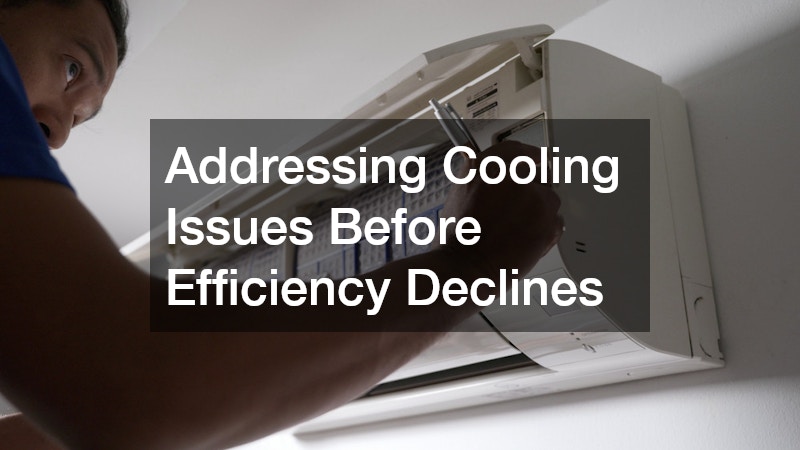
Ignoring minor operational variances within your home’s central air conditioning network—such as subtle unusual whistling sounds, slow airflow output, or minor localized temperature variances—guarantees that a small, inexpensive flaw will eventually trigger a catastrophic system breakdown. A slightly restricted expansion valve, a minor pinhole refrigerant leak, or an aging fan belt forces the entire mechanical assembly to work twice as hard to satisfy your thermostat commands, exponentially accelerating your electricity consumption and driving up utility bills.
Booking a timely, precision intervention with a skilled team of ac repair services at the first indication of a cooling variance allows specialized mechanics to swap out inexpensive electrical contacts or calibrate refrigerant levels before the main compressor fractures under the strain.
Resolving these minor mechanical friction points before they escalate keeps your central climate grid running silently and efficiently, preventing the sudden, runaway energy costs and multi-thousand-dollar emergency replacements that can decimate a household improvement budget.
Installing Modern Systems Designed for Better Performance
When an aging, single-stage air conditioning compressor or standard furnace reaches the end of its mechanical lifecycle and begins to suffer from terminal component wear, continuing to patch up the unit becomes a financially self-defeating endeavor. Outdated climate units consume an excessive amount of electrical energy compared to modern, inverter-driven units, quietly inflating your overhead with every single hour of operation.
Partnering with a premier, high-end firm to complete a comprehensive system load calculation and execute a total hvac installation represents the ultimate strategy for securing long-term operational savings. Modern, high-performance systems utilize intelligent variable-speed compressors that continuously scale their energy output up or down in precise, microscopic increments to perfectly match the immediate thermal needs of the home.
This advanced technology completely eliminates the energy-guzzling stop-and-start cycles common to older single-stage units, providing a highly consistent, whisper-quiet stream of perfectly conditioned air that slashes your monthly electricity expenditures.
Scheduling Seasonal Tune-Ups to Maximize Savings
The physical capacity of your home’s mechanical systems to consistently handle heavy seasonal weather demands, withstand electrical grid fluctuations, and repel environmental dust depends heavily on a continuous state of operational readiness. Relying exclusively on an untrained eye or a distant dashboard glance to evaluate system health is a dangerous strategy, as small hairline fractures in condensate lines and slightly backed-out electrical fasteners remain entirely invisible without tools.
Committing to a regular maintenance cadence utilizing a certified local ac company guarantees that technicians will physically walk your equipment pads, test electrical amperage draws, and audit the clear drainage capacity of all internal lines.
These proactive system audits allow property owners to create an active, chronological record of their asset’s physical condition, a document that holds immense power when tracking long-term efficiency metrics. Regular performance monitoring eliminates the systemic blind spots that lead to sudden, unbudgeted operational failures, ensuring your primary climate systems remain completely uncompromised.
Creating a Comfortable Home With Efficient Climate Control
The ultimate success of any home modernization initiative is realized when high-performance mechanical efficiency fuses seamlessly with uncompromised personal luxury, transforming your daily living environment into a sanctuary of health and peace of mind. A home that delivers perfectly even, quiet, and highly cost-effective thermal comfort through the darkest winter months and the most brutal summer heat waves holds a distinct competitive edge in the modern marketplace.
To achieve this level of complete residential optimization, property owners must secure the overarching guidance and technical precision of an elite heating and air conditioning company. These master building coordinators possess the deep spatial expertise, advanced engineering tools, and certified technician networks needed to manage complex home climate integration smoothly.
Partnering with proven industry masters guarantees that every duct connection is flawlessly sealed, every system zone is perfectly balanced, and your home’s environmental footprint is reduced to an absolute minimum. This comprehensive operational synthesis removes the thermal compromises of past decades, replacing them with an incredibly sophisticated, low-consumption living experience that safely protects your family’s comfort and long-term financial security for generations to come.
Navigating the multi-faceted, highly disciplined process of executing high-return residential HVAC modifications ultimately rewards the proactive property owner with an estate that delivers spectacular spatial comfort, exceptional energy conservation, and robust equity growth. By systematically marrying invisible infrastructure optimizations—like regular air coil chemical cleanings, certified electrical panel modernizations, and advanced variable-speed equipment installations—with smart digital automation controls, you transform an ordinary street address into a high-performance sanctuary. A beautiful, meticulously synchronized residential property acts as an active, supportive partner in daily life, lowering personal stress levels through flawless environmental organization while inspiring its occupants through clean architectural air management and uncompromising safety parameters.