When the peak of summer arrives, the relationship you have with your home changes. It transforms from a simple living space into a sanctuary from the relentless heat and humidity. However, achieving true indoor comfort during a heatwave is rarely as simple as walking over to the thermostat and cranking the temperature down. Anyone who has tried that strategy knows it usually results in two things: a home that still feels strangely humid and a staggering utility bill at the end of the month.
True summer climate control is about managing an interconnected ecosystem. Your indoor comfort depends on how well your home traps cool air, how efficiently that air circulates, how effectively moisture is removed, and how successfully you mitigate external heat sources. If your attic is baking, your windows are leaking, or your internal infrastructure is strained, your cooling system will fight a losing battle. To achieve a perfectly balanced, energy-efficient indoor climate this summer, you need a holistic strategy.
Fortifying the Envelope: Keep the Heat Out and the Cool Air In
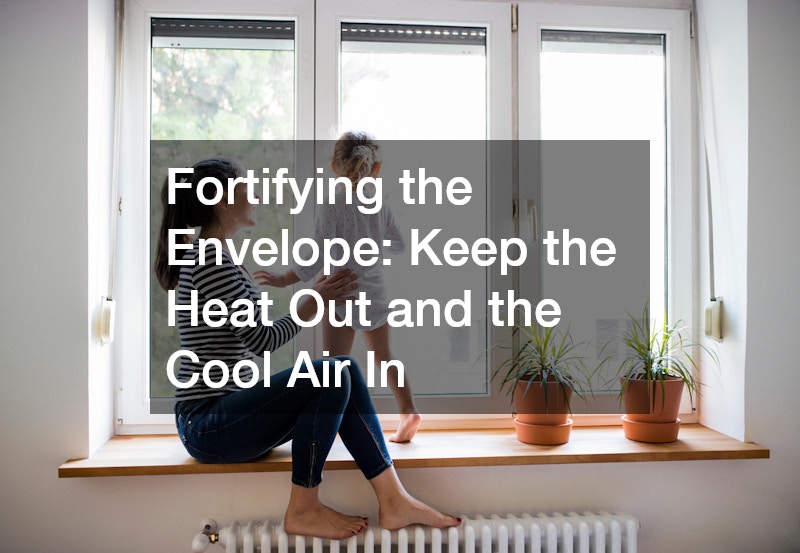
Before focusing on the machinery that generates cold air, you must address the structural envelope of your home. If your house cannot retain the conditioned air it produces, you are essentially paying to cool the neighborhood. Heat transfers into your living spaces through two primary vectors: direct solar radiation through glass and thermal conduction through poorly insulated structural boundaries.
Windows are the weakest point in any home’s thermal envelope. Standard pane glass acts as an accelerator for solar heat gain, trapping infrared light inside your rooms and creating a greenhouse effect.
- Inspect your window frames using the tissue paper test. On a breezy day, hold a single sheet of tissue near the edges of your windows; if it dances, you are losing expensive, conditioned air to the outdoors.
- Apply temporary reflective thermal films to south- and west-facing windows to bounce solar radiation away before it penetrates the glass.
- Utilize heavy, light-colored blackout curtains or cellular shades, keeping them completely closed during peak daylight hours from 10:00 AM to 4:00 PM.
- When caulking and weatherstripping no longer suffice to stop drafts, plan a permanent window installation upgrade to invest in double- or triple-paned units featuring low-emissivity coatings and argon gas fills.
While windows admit lateral heat, the most intense thermal assault comes from directly above. On a ninety-degree day, your attic space can easily reach temperatures exceeding one hundred and forty degrees. This trapped, superheated air acts as a massive radiator, pressing down through your ceilings and forcing your cooling systems to run constantly.
- Ensure your attic floor has adequate insulation, aiming for an R-value between R-38 and R-60 depending on your specific climate zone.
- Check that your soffit, ridge, and gable vents are completely unobstructed by dust, debris, or misplaced insulation batts to allow natural convective airflow.
- Consider installing a solar-powered attic fan to actively exhaust superheated air before it can transfer down into your living zones.
- If you notice mysterious ceiling hot spots or premature shingle degradation, contact a certified roofer to evaluate your roof’s ventilation design and structural integrity.
Maximizing Airflow Efficiency and Indoor Air Quality
Once your home is sealed against external heat, you must optimize the pathways through which cool air travels. Internal circulation is the lifeblood of home climate control. If air cannot move freely, or if the air traveling through your home is choked with debris, your comfort levels drop while your energy consumption climbs.
The internal network of pathways hidden behind your walls plays a massive role in both system efficiency and respiratory comfort. Over the course of a single year, the average household accumulates pounds of dust, pet dander, pollen, and microscopic fibers within its ventilation system.
- Change your return air filters every thirty to ninety days during the peak cooling season, opting for pleated filters with a MERV rating between 8 and 11 to balance filtration with healthy airflow.
- Vacuum out your supply registers and return grilles monthly to prevent surface dust from being pulled back into the system loop.
- Keep all interior doors open slightly, or ensure they have a sufficient undercut, to maintain balanced air pressure across different rooms.
- If you notice weak airflow from your vents, strange musty odors when the cooling cycles on, or excessive dust settling on furniture hours after cleaning, it is time to schedule a thorough ac duct cleaning to restore unhindered, sterile airflow throughout the property.
Beyond the pathways, the mechanical hardware driving the air needs to operate at peak physical calibration. Minor mechanical friction, slightly dirty components, or low fluid pressures can quietly degrade a system’s efficiency by twenty percent or more before a total breakdown occurs.
- Clear a two-foot perimeter around your outdoor condenser unit, removing weeds, leaves, overhanging branches, and decorative fencing that could choke the unit’s exhaust.
- Gently rinse the outdoor condenser coils with a garden hose on a low-pressure setting every spring to wash away packed dirt and pollen.
- Listen for unusual clicking, rattling, or squealing noises when your cooling cycle starts, which often signal failing capacitors or worn fan bearings.
- Secure comprehensive HVAC services annually to ensure your system’s electrical connections are tight, the refrigerant charge is exact, and the internal blower motor is drawing the correct amperage.
Upgrading Hardware and Managing the Thermal Load

Optimizing your home climate isn’t just about maintaining what you have; it is also about leveraging modern technology and safeguarding the critical infrastructure that powers your comfort. As summer temperatures trend higher, older cooling technologies struggle to keep pace with the demand.
Modern cooling units are engineered to operate with a level of precision that was impossible a decade ago. Variable-speed compressors and smart logic systems allow a system to modulate its output, running at lower, highly efficient speeds for longer periods to maintain a perfectly flat temperature line.
- Set your baseline summer thermostat to seventy-eight degrees Fahrenheit when you are home, as every degree lower can increase your cooling energy costs by up to six percent.
- Program your smart thermostat to raise the target temperature by five to seven degrees when the house is empty, ensuring the system doesn’t waste energy cooling an empty structure.
- Run your ceiling fans counterclockwise at medium-to-high speed while you are in the room; the wind-chill effect makes the ambient air feel roughly four degrees cooler than it actually is.
- If your current air conditioner is more than twelve to fifteen years old and uses outdated R-22 refrigerant, proactively research a high-efficiency replacement with a SEER2 rating of 16 or higher to permanently cut your summer operating costs.
A high-efficiency cooling system is only as reliable as the power grid and electrical panel backing it up. Summer introduces unique challenges to your electrical system, from grid-wide brownouts caused by neighborhood-wide AC usage to localized power surges triggered by summer thunderstorms.
- Label your electrical panel clearly so you can instantly identify and reset the circuit breaker dedicated to your outdoor compressor or indoor air handler if an overload occurs.
- Unplug secondary electronics, computers, and non-essential appliances during severe summer storms to reduce the phantom electrical load on your system.
- Test your ground fault circuit interrupters monthly to ensure moisture from summer humidity hasn’t compromised your local outlets.
- If your breakers trip frequently when your cooling system kicks on, or if your lights flicker during startup cycles, consult a skilled residential electrician to install dedicated circuits or a whole-home surge protector to protect your cooling equipment.
Humidity, Hydration, and Ground-Level Climate Tactics

Temperature is only half of the comfort equation; the other half is humidity. High relative humidity prevents sweat from evaporating from your skin, making a seventy-five-degree room feel sticky, heavy, and hot. Managing moisture at the ground level and ensuring proper fluid drainage is vital to keeping your indoor air crisp and breathable.
The materials beneath your feet play a subtle but significant role in how heat and moisture move through your home. The lowest levels of your home—basements, crawlspaces, and ground floors—are naturally the coolest, but they are also the most prone to migrating moisture.
- Keep basement windows closed during humid summer days, as warm, moist outdoor air will condense on cool subterranean surfaces, creating a breeding ground for mold.
- Use dehumidifiers in below-grade spaces to keep relative humidity consistently below fifty percent, which relieves the latent heat load on your upstairs cooling systems.
- Ensure your outdoor landscaping slopes away from your foundation wall at a rate of six inches over ten feet to keep pooling rainwater from saturating the ground beneath your home.
- When renovating lower levels, select a resilient flooring installation that incorporates a high-density vapor barrier beneath the surface to block ground moisture from evaporating upward into your living environment.
As your primary cooling system conditions the air, it naturally extracts gallons of water from the indoor atmosphere every single day. This moisture collects on the indoor evaporator coil and drips into a collection pan before being routed safely outside or into a floor drain. If this drainage pathway fails, the consequences are immediate and costly.
- Inspect the visible portions of your condensate drain line regularly for signs of algae growth, sludge buildup, or cracks.
- Pour a cup of regular white distilled vinegar down your system’s condensate access T-pipe once a month during the summer to break down slime and prevent blockages.
- Install a simple float-switch shutoff mechanism on your condensate pan, which automatically cuts power to your cooling system if the pan begins to overflow.
- If you discover standing water around your indoor furnace or air handler unit, immediately shut off the system and contact professional drain services to clear the blockage before water damages your drywall and flooring.
The Hidden Climate Factors: Water Systems and Plumbing Heat

When evaluating home climate control, few people think about their water infrastructure. However, your plumbing systems and major appliances generate a substantial amount of ambient heat and moisture, subtly fighting against your cooling efforts from inside the house.
Every time hot water travels through uninsulated pipes behind your walls, it radiates heat directly into your living spaces. Furthermore, appliances that are fouled by mineral deposits must work harder and run longer, emitting excessive ambient heat into your utility rooms and kitchen.
- Lower the baseline temperature setting on your storage water heater to one hundred and twenty degrees Fahrenheit, which reduces standby heat loss and saves energy without sacrificing shower comfort.
- Wrap exposed hot water pipes in foam insulation sleeves to keep the thermal energy contained inside the pipe rather than letting it bleed into your cooled rooms.
- Run major heat-producing appliances like dishwashers and washing machines late at night or early in the morning to avoid adding to the thermal load during the hottest parts of the day.
- If your water heater or laundry connections show signs of slow leaks, corrosion, or calcification, have a reputable plumbing company inspect and tune the system to maximize operational efficiency and minimize unwanted heat output.
The quality of the water running through your home also influences your indoor climate control systems indirectly. Hard water contains high concentrations of dissolved calcium and magnesium. When this water is heated or evaporated, it leaves behind a rock-hard scale baseline that insulates heating elements and restricts water flow in cooling-adjacent appliances.
- Clean the spray arms and internal filters of your dishwasher regularly to ensure optimal water distribution and shorter, cooler running cycles.
- Check the supply lines feeding your refrigerator’s ice maker and any standalone evaporative coolers to ensure they are free of mineral blockages that restrict flow.
- Transition to cold-water cycles for your laundry whenever possible, which eliminates the ambient heat generated by filling a washing machine with hot water.
- To permanently eliminate scale buildup across all your water-using appliances and protect your infrastructure from efficiency loss, consider integrating a dedicated water filtration system at your main water entry point.
Optimizing your home for the summer heat is a multi-faceted project that yields massive dividends in comfort, structural longevity, and financial savings. By treating your home as a complete system—sealing the outer envelope, clearing airflow pathways, upgrading electrical backbones, managing humidity, and keeping internal heat sources to an absolute minimum—you take complete control over your environment.
Rather than simply asking your cooling machinery to work harder, these strategic steps allow your home to work smarter. Implement these adjustments systematically, and you can look forward to a cool, refreshing, and deeply relaxing indoor sanctuary all summer long.