
When winter arrives, few things are more frustrating than setting your thermostat to seventy-two degrees, only to shiver on the sofa in a heavy sweater. You hear your heating system running constantly and feel warm air blowing from the vents, yet a stubborn chill hangs in the room. When your utility bill arrives weeks later, the steep cost of inadequate warmth adds insult to injury. This familiar problem stems from a basic misunderstanding of how residential heating works.
Forcing a mechanical system to run longer does not solve underlying comfort issues. Up to forty percent of a home’s heat escapes through unsealed building envelopes, neglected mechanical parts, and weak thermal barriers. A reliable heating strategy goes beyond adjusting a wall dial; it treats the house as one interconnected system. By pairing homeowner upkeep with seasonal maintenance and specialized trade services, you build a whole-home plan that extends equipment lifespan, cuts energy waste, eliminates drafts, and keeps every room warm all winter.
Book a Multi-Point Pre-Season Calibration Before the First Freeze
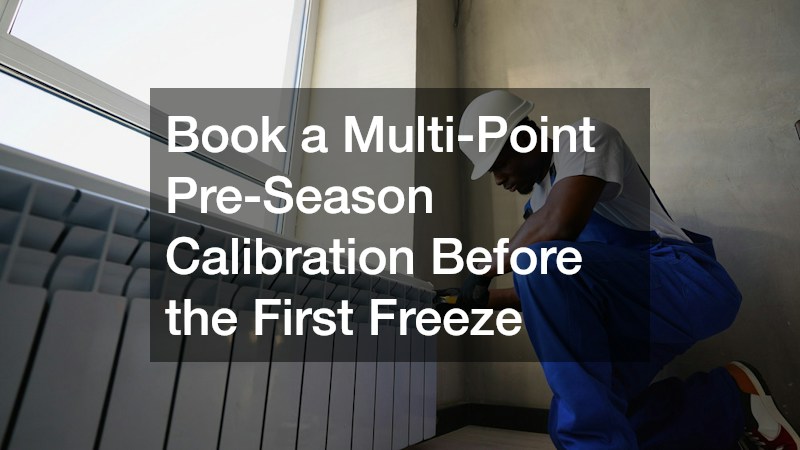
Your heating equipment runs for months at a time, making it one of the hardest-working systems at home. Waiting until it fails on the coldest night leads to expensive emergency calls. Reliable winter warmth starts with routine homeowner care, especially changing pleated air filters every one to three months. When a filter clogs with dust and pet hair, the blower motor works harder to pull air through return ducts, overheating the heat exchanger and tripping safety shutoffs.
Swapping filters alone is not enough for peak efficiency. Scheduling residential hvac contractors early in autumn ensures your system is calibrated and safe before freezing weather arrives.
- Combustion and Ignition Testing: Technicians test the ignition sequence so burners light smoothly without gas buildup, while inspecting the heat exchanger for cracks that could leak carbon monoxide indoors.
- Airflow and Static Pressure Checks: Specialists measure static pressure across ductwork to confirm the blower moves the proper air volume, preventing overheating and pushing warmth to distant bedrooms.
- Ductwork Sealing: Pros locate leaky duct joints in basements or crawl spaces and seal them with mastic paste or foil tape so heated air reaches living areas rather than unconditioned spaces.
Set Up Automated Refills and Inspect Storage Tanks Early
For households heated by oil or propane rather than natural gas, winter readiness requires fuel management. During humid summer months, a partially empty storage tank is vulnerable to internal condensation. As outdoor temperatures swing, moisture forms inside tank walls and sinks beneath the fuel. Water pooling at the tank bottom encourages bacterial growth and corrosive sludge, clogging narrow fuel lines and fouling burner nozzles right when demand peaks.
Partnering with a dependable residential fuel service before autumn temperatures drop protects your tank and prevents mid-winter supply interruptions.
- Degree-Day Delivery Scheduling: Providers track local temperatures using degree-day calculations to forecast usage and schedule automatic refills before your tank runs low during a storm.
- Winterized Additive Treatments: Technicians blend anti-gel additives into stored fuel ahead of sub-zero weather, preventing thickening and wax crystallization that can block exterior supply lines.
- Comprehensive Hardware Inspections: A seasonal checkup evaluates exterior piping for corrosion, tests tank float gauge accuracy, and verifies that emergency shut-off valves operate smoothly.
Act Fast on Short-Cycling, Unusual Noises, and Uneven Room Temperatures
Heating equipment rarely fails without giving early warning signs. Spotting minor mechanical distress saves you from sudden heat loss and costly component replacements. A gas burner flame should burn crisp and blue; a flickering yellow flame signals incomplete combustion and possible carbon monoxide production. Likewise, if your system starts up, runs briefly, and shuts off before reaching the set temperature, it is short-cycling—a pattern that overheats motors and wears out ignition parts rapidly.
Calling furnace repair services at the first sign of trouble keeps minor wear issues from turning into a mid-winter breakdown.
- Flame Sensor and Igniter Maintenance: Technicians clean carbon buildup from oxidized flame sensors and test hot-surface igniters for resistance wear, replacing weak parts before they fail on a freezing night.
- Drainage System Clearances: High-efficiency condensing units produce gallons of acidic condensate daily, so pros flush drain lines and traps to prevent water backups from tripping float switches or damaging control boards.
- Zone Damper Rebalancing: When certain rooms stay chilly while others overheat, specialists inspect and recalibrate motorized zone dampers inside ducts to balance airflow throughout the house.
Verify Dedicated Circuit Loads and Smart Thermostat Wiring

Even gas, oil, and propane systems depend heavily on reliable electricity to run blower fans, draft inducers, zone valves, and electronic control boards. If your electrical panel has worn breakers, undersized wiring, or loose connections, minor voltage drops can cause erratic operation or damage circuit boards. Adding supplemental electric baseboards, radiant floor mats, or a cold-climate heat pump also places new demand on your home’s power distribution.
Hiring a licensed electrician ensures your wiring, breakers, and controls can support modern heating equipment safely without nuisance trips.
- Dedicated Breaker Inspections: An expert examines the dedicated circuit feeding your heating unit, tightening loose lugs, checking for heat discoloration, and confirming breaker amperage matches manufacturer specifications.
- C-Wire Installations: Smart Wi-Fi thermostats need continuous twenty-four-volt power to maintain connectivity and schedules, so a technician runs a common wire from your air handler to the wall plate.
- Panel Capacity Audits: Before installing high-draw electric heat strips or heat pump compressors, a panel load calculation confirms your main service has sufficient capacity for peak winter demand.
Repair Damaged Flashing and Clear Ventilation Paths to Prevent Ice Dams
Many homeowners overlook their roof when troubleshooting high heating bills, yet it protects your home’s primary thermal barrier. Missing shingles, cracked pipe boots, or rusted flashing around chimneys let wind-driven rain and melting snow seep into the attic. Once moisture saturates fiberglass or cellulose insulation, the fibers mat down and lose thermal resistance, allowing indoor warmth to escape rapidly through the ceiling.
Having a qualified roofer inspect your upper exterior each fall prevents hidden leaks and stops destructive ice dams before winter storms hit.
- Flashing and Sealant Restoration: Specialists reseal vulnerable joints around chimneys, skylights, and vent stacks so freeze-thaw movement cannot open gaps that let moisture soak attic framing and insulation.
- Soffit and Ridge Ventilation Audits: Pros clear blocked soffit intake vents and verify open ridge exhaust channels so cold outside air circulates continuously beneath the roof deck.
- Ice Dam Prevention: Keeping the roof deck uniformly cold prevents snow from melting over warm spots, flowing to cold eaves, and refreezing into heavy ice dams that push water beneath shingles.
Air-Seal Ceiling Penetrations and Upgrade R-Values Overhead
Even beneath a watertight roof, homes lose heat through the stack effect. Because warm air rises, it presses constantly against upper ceilings and escapes into the attic through recessed lights, plumbing chases, attic hatches, and unsealed top plates. As warm air exits overhead, it creates negative pressure downstairs that pulls freezing outdoor air through gaps around windows, doors, and basement sills.
Working with experienced attic insulation companies stops upward air leakage and strengthens the thermal blanket above your living spaces.
- Blower Door Diagnostics: Technicians use calibrated depressurization fans and thermal imaging to locate hidden ceiling bypasses, pinpointing where conditioned indoor air escapes into the attic.
- Comprehensive Air Sealing: Before adding insulation, crews apply expanding spray foam and fire-rated caulk around wiring holes, duct boots, and light housings to block convective airflow.
- Deep Thermal Blanketing: Once air leaks are sealed, installers blow in loose-fill cellulose or fiberglass to meet regional targets—typically R-49 to R-60—creating consistent overhead heat retention.
Insulate Rim Joists and Retro-Fill Cold Exterior Wall Cavities
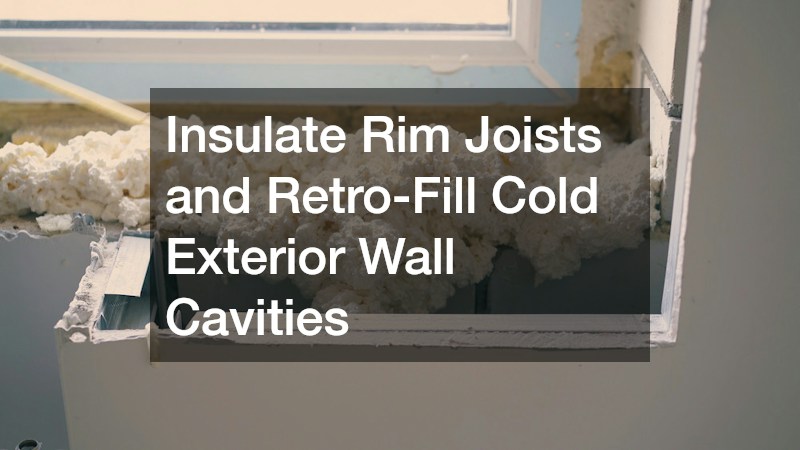
While attics account for overhead heat loss, drafty walls and floor perimeters often cause chilly currents that make rooms uncomfortable. The rim joist—where wooden floor framing sits atop the concrete foundation—is one of the leakiest areas in residential construction. On windy nights, cold air pushes through unsealed rim joist seams and chills the floor above. Meanwhile, older homes frequently have uninsulated exterior wall cavities, leaving minimal thermal resistance between warm rooms and freezing air.
Scheduling professional insulation services to seal and fill these vulnerable perimeter zones dramatically reduces drafts and stabilizes indoor temperatures.
- Rigid Foam and Spray Sealing: Installers cut rigid foam board to fit each rim joist bay and seal edges with expanding polyurethane foam, blocking cold air infiltration and condensation along the sill plate.
- Crawl Space Encapsulation: For homes over vented crawl spaces, crews line the ground and foundation walls with reinforced vapor barriers and rigid insulation to keep subfloor air warm and dry.
- Drill-and-Fill Wall Injections: Rather than tearing down interior drywall, technicians drill small holes behind exterior siding and blow dense-pack cellulose into empty wall cavities before patching openings cleanly.
Seal Foundation Cracks and Insulate Damp Basement Walls
Unfinished basements act as massive heat sinks during winter. Bare concrete foundation walls conduct heat readily, drawing warmth out of basement air and transferring it into surrounding frozen soil. Because warm air rises and circulates throughout the house, subterranean heat loss pulls warmth downward from living floors. Furthermore, hairline foundation cracks allow damp soil moisture and cold air indoors, making lower levels feel raw and forcing your heating system to run longer cycles.
Consulting a concrete foundation contractor helps seal below-grade vulnerabilities and prepares basement walls for effective thermal retention.
- High-Pressure Crack Injections: Specialists inject expanding polyurethane foam or structural epoxy into foundation cracks, blocking cold air drafts and seasonal groundwater seepage.
- Exterior Grading and Drainage: Pros reshape soil slopes and extend downspouts away from perimeter walls so melting snow drains off rather than pooling and freezing against the foundation.
- Moisture-Resistant Wall Prep: Technicians patch spalling interior masonry and apply vapor-retarding coatings, creating a dry, sound surface ready for rigid foam board insulation.
Layer Thermal Underlayments and Insulating Coverings Over Cold Subfloors
Indoor comfort depends on conductive heat transfer between your body and the surfaces you contact. Bare ceramic tile, natural stone, or thin hardwood planks over unheated basements and crawl spaces draw warmth directly from your feet. That rapid heat loss makes a room heated to seventy degrees feel several degrees colder, tempting you to raise the thermostat unnecessarily instead of addressing heat loss at floor level.
Visiting local flooring stores to explore insulating underlayments and surface coverings lets you add lasting warmth underfoot without burning extra fuel.
- Acoustic and Thermal Underlayments: When upgrading floating floors, choose high-density cork or closed-cell foam underlayments with integrated vapor barriers that slow cold transfer from subfloors below.
- Thick Area Rugs and Felt Pads: For an immediate upgrade over existing tile or hardwood, pairing dense wool area rugs with thick felt pads traps insulating air pockets across living areas.
- Radiant-Compatible Materials: If you install electric or hydronic underfloor heating, specialists can recommend engineered wood or luxury vinyl products built to conduct warmth evenly without warping.
Level Exterior Mechanical Pads and Seal Walkways Against Freeze-Thaw Damage
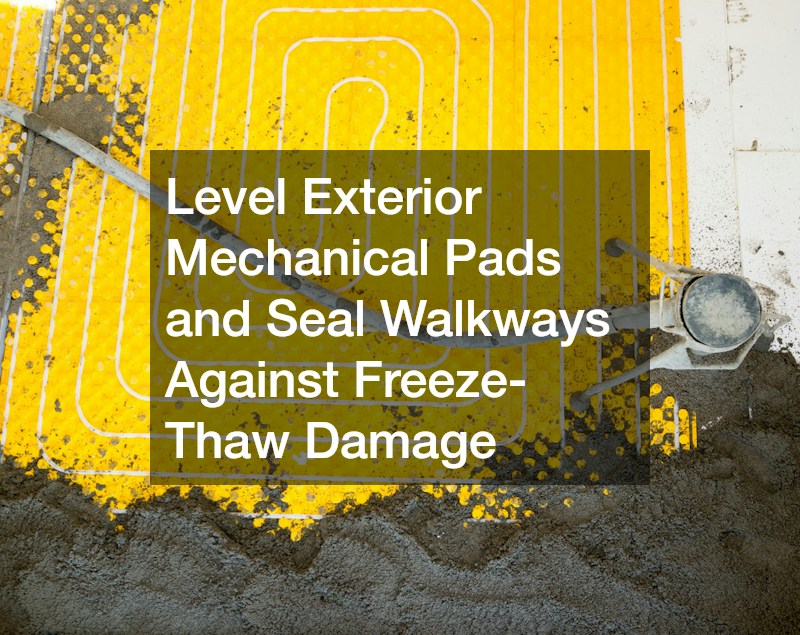
If your home uses a heat pump, ductless mini-split, or outdoor fuel tank, maintaining its exterior base is essential for winter reliability. Heat pump condensers enter defrost cycles in freezing weather, shedding meltwater onto the pad beneath them. When an exterior concrete slab sinks or tilts toward the house, defrost runoff pools and refreezes around the base, stressing refrigerant lines, obstructing fan blades, and risking compressor damage.
Bringing in a concrete company before winter sets in keeps outdoor equipment level and protects exterior entryways from freeze-thaw deterioration.
- Condenser Pad Mudjacking and Leveling: Crews inject leveling grout beneath sunken mechanical slabs to restore proper pitch, ensuring defrost runoff drains away from coils and piping.
- Entryway Stoop Stabilization: Technicians lift or resurface settled concrete stoops at exterior doors so thresholds align properly with bottom door sweeps, eliminating cold air gaps at entryways.
- Penetrating Walkway Sealants: Pros apply breathable siloxane sealers to perimeter sidewalks and equipment pads, preventing de-icing salts and freeze-thaw expansion from cracking concrete near your home.
Getting the most from your home heating never comes down to a single quick fix. True winter comfort happens when mechanical efficiency, reliable electrical power, and a tightly sealed building envelope work together as one cohesive system. When you address how heat is produced, how controls are powered, and where warmth escapes through roofs, walls, basements, and floors, you gain lasting control over indoor comfort and monthly utility bills.
You can put this strategy into action with a simple seasonal routine. Start indoors today by replacing dirty air filters, clearing furniture away from supply vents, and setting sensible thermostat schedules. Next, walk your home’s perimeter on a breezy day to feel for drafts around doors, windows, rim joists, and attic hatches. Finally, schedule professional inspections and envelope upgrades early in autumn before winter service backlogs arrive. Investing in preventative care now rewards you all season with lower energy costs, quieter equipment, and reliable warmth through the coldest days of winter.
